
London, 26 October 2026. Harry Kane has finally lifted the Ballon d’Or. At 33, the Bayern Munich striker was named player of the year, ahead of Kylian Mbappé and Lamine Yamal. Behind the individual award lies a question that deserves more than a list of honours: how did Kane turn an exceptional scoring season into a candidacy that was impossible to ignore?
The answer lies in a combination of three things: extraordinary attacking output, trophies won with Bayern and an ever more complete role in the team’s play. That is what the official figures for the 2025-26 season show, beyond the announcement of the winner.
The key points in 30 seconds: 73 goals for club and country, including 61 for Bayern in 51 matches; 36 in the Bundesliga and 14 in the Champions League; a domestic treble in Germany; and the first men’s Ballon d’Or won by an Englishman since Michael Owen in 2001.
73 goals: the season that changed Kane’s standing
In the 2025-26 season alone, Harry Kane scored 61 goals in 51 competitive matches for Bayern, almost 1.2 goals per game. Add his 12 goals for England over the period under consideration and the total reaches 73 in all competitions, according to the Ballon d’Or organisers and UEFA. The figure is spectacular, but its breakdown is even more telling.
In the Bundesliga, 36 goals in 31 matches. Kane remained the top scorer in the German league for the third season running. In the Champions League, his 14 goals powered Bayern’s run to the semi-finals. He also scored 10 times in the German Cup and once in the Franz Beckenbauer Super Cup. The official tally also records seven assists for Bayern.
These figures paint a rare profile: a centre-forward who scores consistently over a whole season without relying on a single competition. Another statistic published by the organisers sums up his efficiency: one goal every 66 minutes for Bayern.
Bayern gave his numbers real weight
A Ballon d’Or is not simply a scoring contest. Kane’s season came with a domestic treble for Bayern Munich : the league, the German Cup and the Super Cup. That team context matters when assessing his candidacy: his goals drove a side that turned domestic dominance into silverware.
The European campaign counts too, though it should not be overstated. Bayern went out in the Champions League semi-finals, so Kane did not win the competition. Even so, his 14 European goals confirmed that his influence reached well beyond the German league.
There is an important caveat: no single statistic can reconstruct the jury’s vote. But the mix of output, consistency and team honours explains why his case was so strong against the other favourites.
Kane is more than a finisher
It would be tempting to sum up this season with a goal counter. Yet the England captain’s game is less simple than it looks. Kane can drop off the defensive line to offer an option between the lines, direct the play and let the wide players run in behind. That movement complicates opponents’ choices: follow the number 9 and open up space, or let him receive the ball?
His goal against Stuttgart, highlighted in the official Ballon d’Or account, illustrates that freedom: he set off from a deep position, created space in front of him and then struck from distance. It does not prove he plays like a midfielder, but it shows a striker able to hurt opponents well before the final touch.
The seven assists recorded with Bayern complete the picture. His value lies not only in his finishing but also in what his movement makes possible for his team-mates. This is a tactical reading by Vantstep, based on the facts and sequences described in official sources.
Why Mbappé and Lamine Yamal finished behind him
The official ranking places Kylian Mbappé second and Lamine Yamal third, ahead of Rodri and Lionel Messi. The podium brings together three different profiles: Mbappé’s finishing power and versatility, Yamal’s creative influence, and in Kane’s case exceptional scoring backed by team trophies.
It would be misleading to claim the jury applied a “goals + trophies = winner” formula. The vote takes several dimensions of performance into account. What Kane’s case does show is that a centre-forward’s season can combine enough consistency and weight in major competitions to win the argument.
To understand how the election works, Vantstep explains who votes for the Ballon d’Or, the criteria considered and the points system. The Ballon d’Or 2026 results page brings together all the awards from the ceremony.
From Tottenham to London: a symbolic triumph
The venue and his career path give this award a special dimension. Kane was long associated with Tottenham, where he established himself as one of the greatest goalscorers in English football, before joining Bayern in 2023. On 26 October 2026 he received his Ballon d’Or in London, at the 70th edition of the ceremony.
He becomes the first Englishman to win it since Michael Owen in 2001, ending a 25-year wait. The London evening was also a nod to Stanley Matthews, the trophy’s first winner in 1956. For Kane, regularly named among the great strikers of his generation, the award changes how his career will be told.
The questions people are asking after his win
Did Harry Kane really win the 2026 Ballon d’Or?
Yes. The Ballon d’Or organisers and UEFA officially announced his victory on 26 October 2026 in London. Alexia Putellas won the women’s award.
How many goals did Harry Kane score to win it?
Official sources record 73 goals for Bayern and England in the 2025-26 season, including 61 goals in 51 matches for Bayern. Of those 61 goals, 36 came in the Bundesliga and 14 in the Champions League.
Where did Mbappé and Lamine Yamal finish?
Kylian Mbappé finished second and Lamine Yamal third in the 2026 men’s Ballon d’Or. For the full list of 30 players and the other awards, see the ranking published by the organisers.
Sources, photo and transparency
Goal figures, rankings and awards were checked against the official Ballon d’Or article on Kane, the official ranking of the 30 players and the UEFA press release. The passages on his tactical role are editorial analysis, not a quote from the jury.
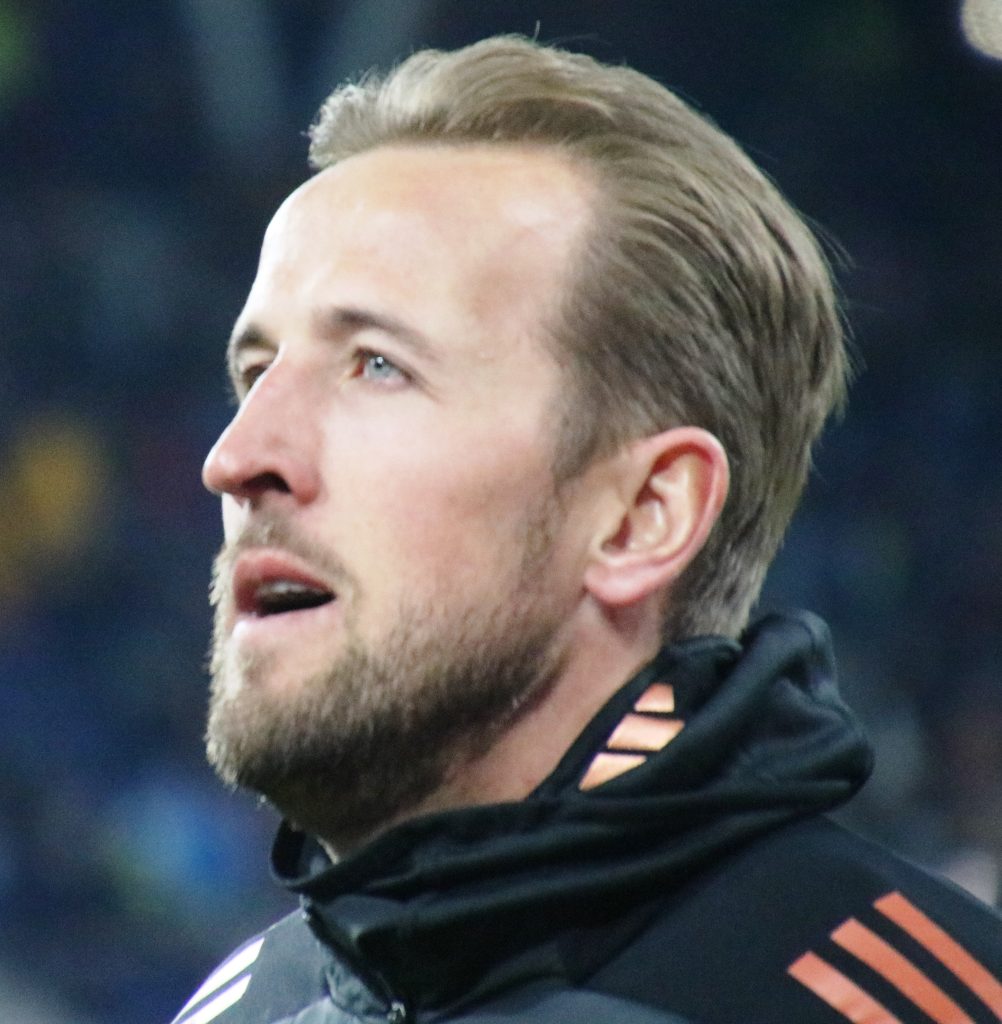
Illustrative photo: Harry Kane at Bayern during a friendly on 6 January 2025, by Werner100359 — Wikimedia Commons, licence CC BY-SA 4.0. The photo predates the ceremony and does not show the trophy presentation.
